


A musical mentor put her hand on my heart and said, “go home, Ashley.” My heart stalled because I knew she didn’t mean that it was time for me to get into my car and drive toward the sunset. She meant that I need to, as Clarissa Pinkola Estés, author of Women Who Run With the Wolves, refers to as the “soul-home,” something that each feminine must return to in her natural creative life cycle.
For years, I have attempted to mimic great singers and songwriters. I have listened to vocal coaches who were famous in the 80s, who were critically acclaimed in other countries, or their hometowns near my own. I’ve dove down into the abyss of constructive criticisms, trying to extract something significant to bring to the surface. Each time, I only came up breathless, or not knowing how to breathe. I dove “out of my depth,” so to speak.
Further away the shore moves, or am I carrying myself out into the ocean, a voice lost on the horizon?
“Home is a sustained mood or sense that allows us to experience feelings not necessarily sustained in the mundane world,” –
Clarissa Pinkola Estés, Ph.D., Women Who Run With the Wolves
Hayley Williams, Selena, Amy Lee––all women who shaped my voice from a young age. For decades, I mimicked their sounds. Of course, there were other women before them: Paula Abdul, Angelica, Whitney Houston, Tina Turner, Mariah Carey, Britney Spears, Mandy Moore, Christina Aguilera –– I listened and I sang the words back to the best of my ability. Alone in my room, I would sing into my dad’s DJ microphone, or the countless others I begged my parents to purchase for me, and even ones I inherited from fast food meals like the McDonald’s slime echo microphone. In my childhood, I was collecting sounds that felt right in my body. I understood my limitations, too.
Yet, most of those limitations came from being told I was too loud and bothering the adults. So, I learned how to sing under my breath, or waited for people to leave the house, and then I would let Ashley (my voice) out. While I thought I was being respectful, subconsciously, I was learning that my voice was not safe around my family. That there were certain folks who would pause to listen, and others who I would scrutinize and annoy. And there were consequences for doing so.
One summer, after being gift a Casio keyboard for my birthday, I spent hours in my grandparents’ backyard playing chords, little songs I made up and hummed along to. I didn’t know I was making chords because I was never given proper musical training, but the more I became familiar with the sounds the little machine made, I’d take a crayon and place a magenta marking above the key. Sure enough, I was figuring out which sounds were mine. I assumed the adults would marvel at my genius and become my audience, but Nina (my mom’s sister and my godmother) stormed out of her bedroom—which was located in the backyard of my grandparents’ property—with furrowed brows and tight lips.
She pointed a threatening index finger at me. Commanded me to turn the volume down. Never mind that at that very moment and one reason why I chose to claim my space in the backyard was because her son, Andrew, was in the main house blasting rap and making the walls shake—a wall he shared with my grandparents and ones he put holes into when he was angry. She never told him anything unless her own parents scolded her, but even then he wouldn’t listen and would crank the volume up. Through frustrated tears, I lowered the volume. Did she want to tell the roosters next door to quit their cock-a-doodle-doos? It wasn’t until I could hear her blow drying her hair from a close distance, that I assumed it was safe to turn the volume back up. How could she hear over her thick wet hair and air?
The thwack of a rusting metallic screen door made me jump and run towards the lemon trees. She snatched my Casio from the picnic table and held it over her head like a sacrifice. If I wanted it back, I would have to submit a formal apology to her, but until I did so, she would refuse to speak to me and I couldn’t play piano.
That day I learned that only some people got to enjoy music freely while others had to suffer in silence, literally.
When Andrew grew up, he owned a studio on my grandparents’ property. Not only did he love rap, he aspired to become a music producer. He sat in that back room creating beat-after-beat and inviting men from the surrounding area to come and rap along to his tracks. A few times, he invited me to watch his progress, to learn what he was learning at a music engineering school in Hollywood. I was proud of him. Although he had been one of my abusers, I was still in awe of his creations and desperately wanted to be part of that world because at the end of the day, music was my silent dream.
I was in college at the time, trying to form bands. I lacked the confidence to follow through, to sing in front of the boys I’d find playing guitars on the lawn. But with Andrew, maybe I could put my foot in the door.
The only problem? Andrew liked rap and I loved rock music. When he wrote beats for me, I had to be sexy, cute, and coy with my voice. My words couldn’t be sad, or “emo.” They had to express passion, sex, and romance a male and female audience who (presumably) wanted the same. But as a college girl, I had so many other things I wanted to scream about. I held in so much frustration with the world that was unraveling the more I connected the dots between my world religion and literary theory classes. Life was deeper than singing about a drunk weekend and partying with the boys.
We came to a compromise. I could write love songs about crushes I had. My voice remained small and confined to men. For men. By men.
Later, after I earned a bachelor’s and master’s degree in creative writing, I set off on becoming a college educator. But with no serious job prospects, I was free to experiment with my career, and being that I lived in LA meant that I had a lot of opportunity to get into the music industry. I was a merch girl, I worked at festivals, I became a promoter for a small artist, and I dabbled in journalism for a little bit to see if, at the very least, I could interview bands and find potential collaborative partners.
None of that fulfilled me.
With the little money I made being an afterschool tutor, I used it to take singing lessons with Kris. Kris saw straight through my anxiety and wanted to help me unleash my big voice. The little girl whose Casio had been taken from her was given the floor to get mad. Except, that emotion was still too far suppressed to reach right away. Although, she learned how to belt and never looked back.
Now that I could belt, I could audition for X Factor and The Voice. It was my 26th birthday when I decided to stand in line for a chance to sing for X Factor producers. My parents came to support me, but I noticed they were more interested in the people around us. When those folks started singing, they paid attention. Mom recorded them on her new iPhone because “one they could be famous.” Okay––well, their kid could have also been famous, too. But that’s alright. I could objectively recognize when people were more talented than me.
I tried not to let that faint whisper of my parents’ indirect doubt get to me. During the audition, several hours later, a woman producer leaned forward and listened to me sing Paramore’s “Monster.” She had her hand under her chin, eyes locked on me. The other three male producers’ eyes wandered everywhere. At the ceiling, the floor, the clipboard. None of them noticed I was standing right in front of me.
She put her hand up, “I see something in you. I’m going to give you a chance to go to the next round.”
Which was the next day. Quieter than the first. Everyone wore a number on their chest. Everyone could hear people singing behind curtains in a roomy college auditorium. But I knew I could make it. I knew that stage was meant for me.
I was met with two producers behind that square curtain. I told them a rambly story of how I was teetering on becoming a professor or an artist, and then I sang my song.
“Do you have another?”
I sang the other. "
“It seems like you haven’t developed your voice. I’m sorry.”
What did they mean? I could belt! I could be loud and sometimes make that vocal fry sound.
A few months later, The Voice producers said the same thing.
“It sounds like you’re just doing what everyone else is doing. What can you do?”
And I had no honest answer to that.
“Let’s help you find your home,” my music mentor said to me last Wednesday. “We’re gonna get real weird now. Tell me about your favorite clothing.”
Jumpsuits, because they are light and airy. They flow. They’re feminine. She had me dance around the piano, arms in the air in surrender, flowing like the jumpsuits I love to wear in the summer. My eyes slipped shut and I sang.
She paused after some time. My eyes opened.
“What?” I asked.
“Where did you go when you did that?”
I smiled. “Home. I think.”
“It was beautiful. I don’t think you have a problem with what your home is. You know what home is, you just need to let the rest of us see you.”
How beautiful it is to be witnessed. To think I sat on my knees the day before wringing the neck of my guitar. I wanted to quit music all together. And I told her that exactly. How I want to abandon music––playing, learning, singing, expressing–– all again. It wouldn’t be the first time.
And she said, “That means you’re doing the work. You’re slowly letting people see you. You’re having a breakthrough and anxiety is trying to protect you. But you’re not letting it this time…you’re truly coming home.”
I think about all of the younger versions of me who felt so many emotions and was told to be quiet. That only certain versions of myself could be exposed through song, or through silence. That my job was not to mimic. Singing is about releasing the sound within.
So, I sit here today diving deeper, letting the shore slip away. There on the shore, all the people and the traumas. In the shallows, all of the kelp and the worries trying to entangle me. But out here in the middle of the deep sea, the sky greets me with stars and clear skies. I sing to myself and a lighthouse shines in my direction, guiding me to another place on land.
A guitar chord strums in the distance, inviting me to reach it when I am ready. How ever long it takes, it continues to play, and I swim towards it knowing I’m already in a better place than I was before, and I can’t wait to see who will greet me there.
How to Support Me
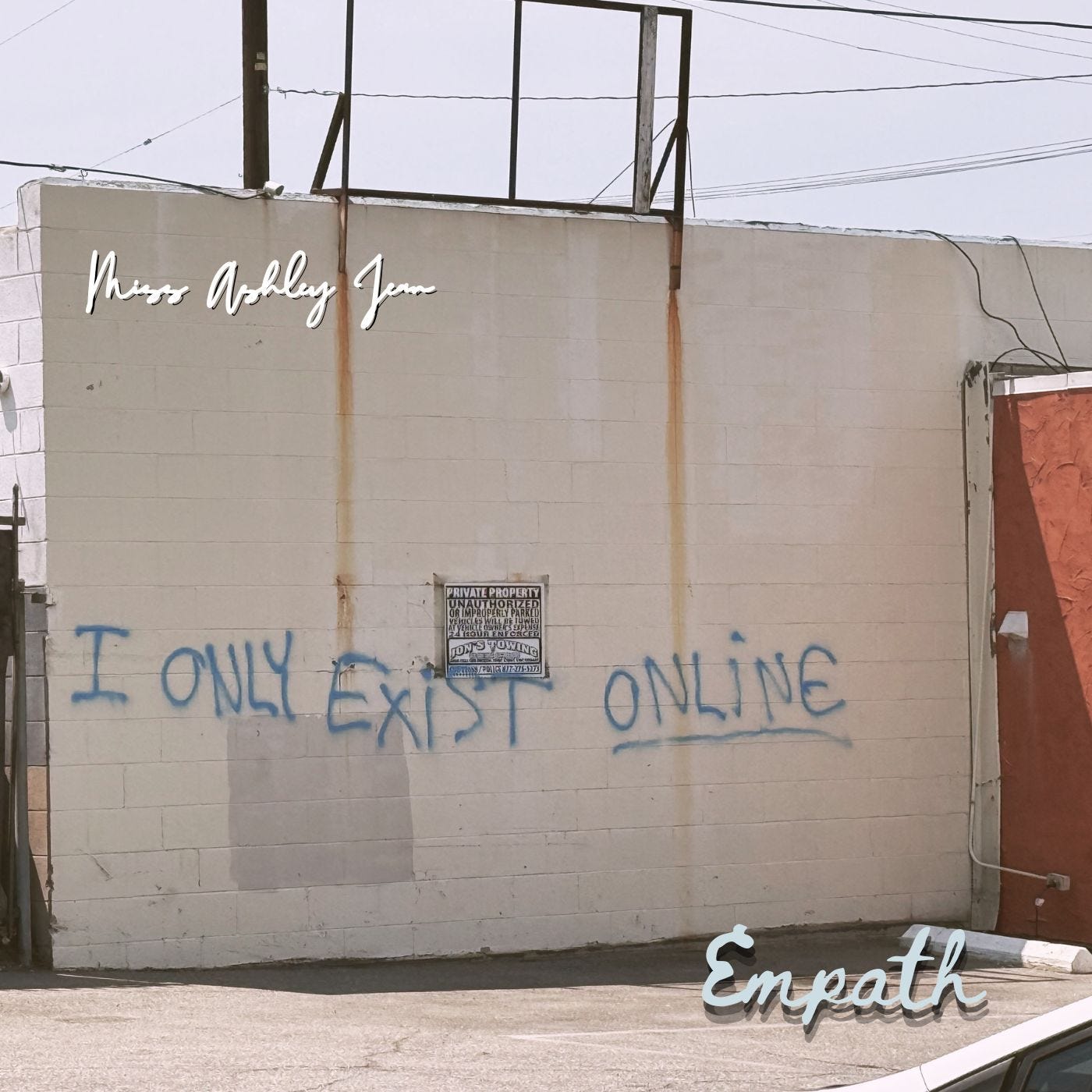
On Friday, May 15th, my latest single “Empath” will release on streaming platforms and my Bandcamp. I invite you to listen, share, and spare anything you could towards my music career.
Songs that Feel like Home
If you’re also curious, here are a list of songs from my discography that feel the most like “me”:
Take off your shoes and get comfy with me! I welcome you to my creative home.
xo
Ashley Jean